Discussion and Verdict
I have observed a tendency to conflate, or at least structurally identify, (multi-) filtration and (multi-) persistence within Topological Data Analysis (TDA) literature1. This occurs even though they are distinct concepts that arguably should remain theoretically separate.
Here, I discuss multi-filtration on a total object  . This can be formulated as a family of filtrations
  on a fixed total object
  , where
  is an abelian category and
  is a filtered category. This notion gives rise to a “spectral decomposition” of from multiple perspectives—where each filtration is responsible for “slicing” along a specific parameter—while behaving coherently along the indices
  .
.
Although this naive, intrinsic construction of “multi-filtration” generally fails to be a  -filtration (
 ) under the standard definition2, the spirit is similar: slicing a complex object into smaller, comprehensible pieces from multiple perspectives. In many practical applications, we might assume is an algebraic object (e.g., a homology or homotopy group) and
  imposes an exhaustive filtration of subobjects. Through this, the total object is recovered by completion; namely
 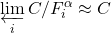 up to quasi-isomorphism for each . The difficulty in extending this to multi-dimensional filtration lies in coherence, specifically where the resulting -filtration structure forces the internal filtrations to commute.
In this framework, multi-persistence on a total object (prototypically a global, ill-posed point cloud) is defined differently. It captures higher-dimensional (i.e., multiple) features (generally in  ) that admit a sense of “robustness” for measuring the topological invariants of , alongside a complete track of feature growth. In this context, we assume is a point cloud or cluttered object, often devoid of inherent algebraic structure.
Here is a comparison summary (partially generated by Gemini 3.0 Pro):
| Feature | Multi-Filtration | Multi-Persistence |
| Primary Context | Algebraic Topology / Homotopy Theory | Data Analysis / Applied Topology |
| Input Object | Algebraic (Complex, Module, Group) | Geometric (Point Cloud, Image) |
| Primary Tool | Spectral Sequences (Iterative homological slicing) | Representation Theory of Quivers (Decomposition) |
| Key Output | Convergence (or say, limit. Recovering from slices) | Invariants (Barcodes, Betti numbers) |
| Concept of Indices | Filtered category, giving a sense of distinct, often orthogonal perspectives (e.g., “Weight” vs “Hodge”) | Ordered dimensions of a single parameter space (e.g., ) |
| Wildness | Generally avoided by imposing “Strictness” conditions (Deligne).3 For more concrete case, see Rips Bifiltrations in An Introduction to Multiparameter Persistence. | Unavoidable or the solutions are not known; requires new invariants (Rank, Sheaves) |
Top-Down view
Several approaches interpret concrete objects, such as (multi-)persistence modules, through the lens of abstract theory, specifically spectral sequences.
In the single-parameter setting, the dimensional equivalence (i.e., Betti numbers)4 between the spectral sequence associated with a filtration and the persistence module is established in Spectral Sequences, Exact Couples and Persistent Homology of Filtrations by Saugata Basu et al.
However, for the multi-persistence case (with two or more parameters), I have not found extensive results beyond dimensional equivalence, which is canonically deduced from the single-parameter results (c.f., Computing Invariants for Multipersistence via Spectral Systems by A. Guidolin et al.).
- (e.g., The Theory of Multidimensional Persistence by Gunnar Carlsson and Afra Zomorodian, An Introduction to Multiparameter Persistence by Magnus Bakke Botnan and Michael Lesnick)
- For the consistence of k-derived objects, refer to Cartan-Eilenberg Resolution and similar discussions.
- As of 2025, the core taming result of Deligne — Splitting Theorem — has been generalized by the works of Bondarko et al. in multiple ways, especially to the Triangulated Category under some conditions.
- along with mild relationships fitting specific forms of exact sequences